

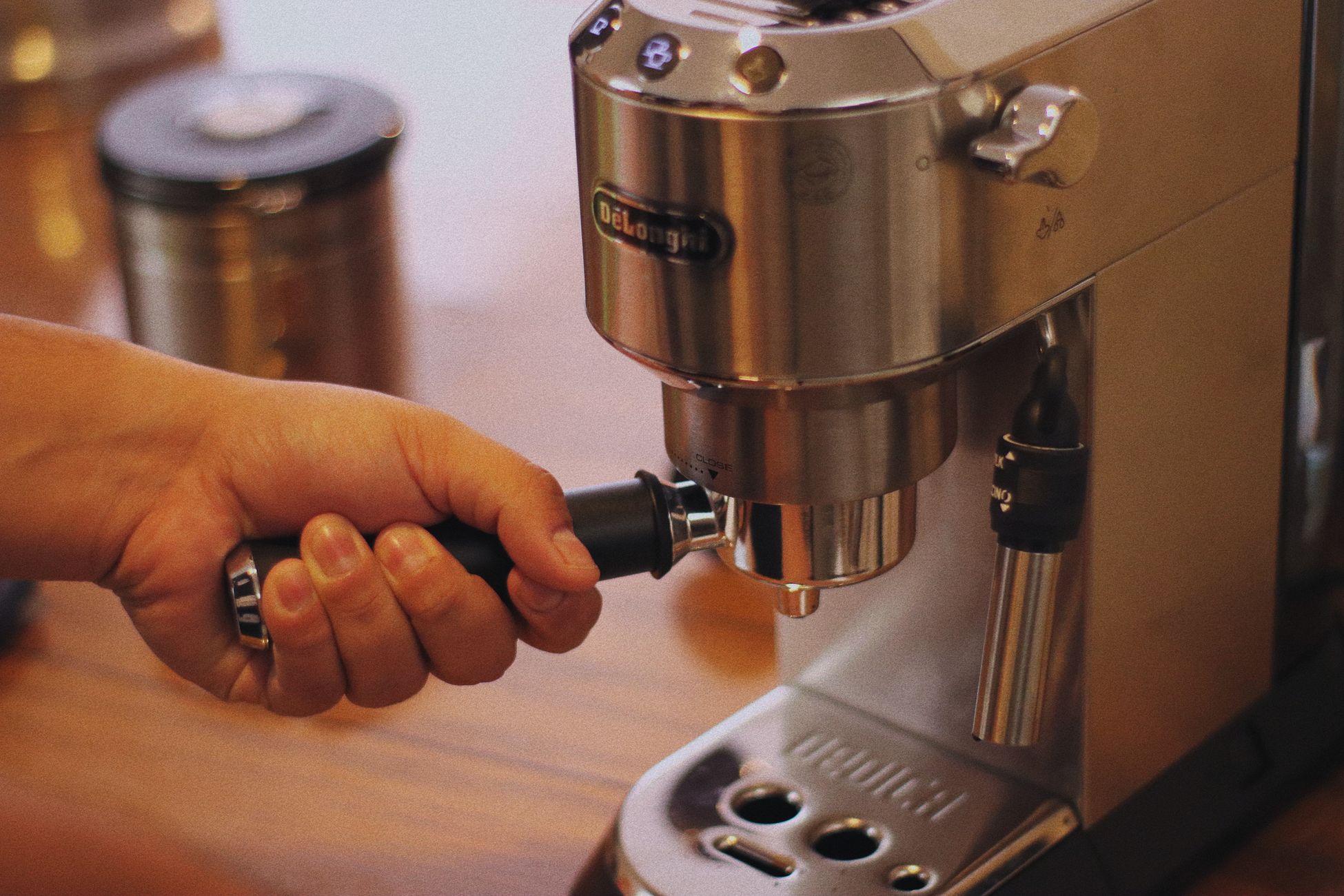
The basket that came with your espresso machine is a metal cup with holes in it. So is the eighty dollar basket that people online insist changed everything for them. Physically they look almost identical, and it is fair to be skeptical that the expensive one does anything at all.
It does, and the reason is visible under magnification and invisible to the naked eye. The difference is not the idea of the basket. It is how accurately the holes were made.
Start with coffee that shows what the gear does.
What the Holes Are Supposed to Do
At the end of a shot, water has passed through the coffee bed and needs to leave. The basket's perforated bottom is the exit, and its job is to let water out evenly across the entire surface.
Evenly is the operative word. If water exits faster through one region of the base than another, the coffee above that region has more water flowing through it. That coffee gets overextracted while the coffee above a slower region gets underextracted, and both contributions land in the same cup.
This is the same problem as channeling, approached from the bottom instead of the top. Distribution tools and puck screens deal with the entry side. The basket deals with the exit side.
How Stock Baskets Are Made and Why It Matters
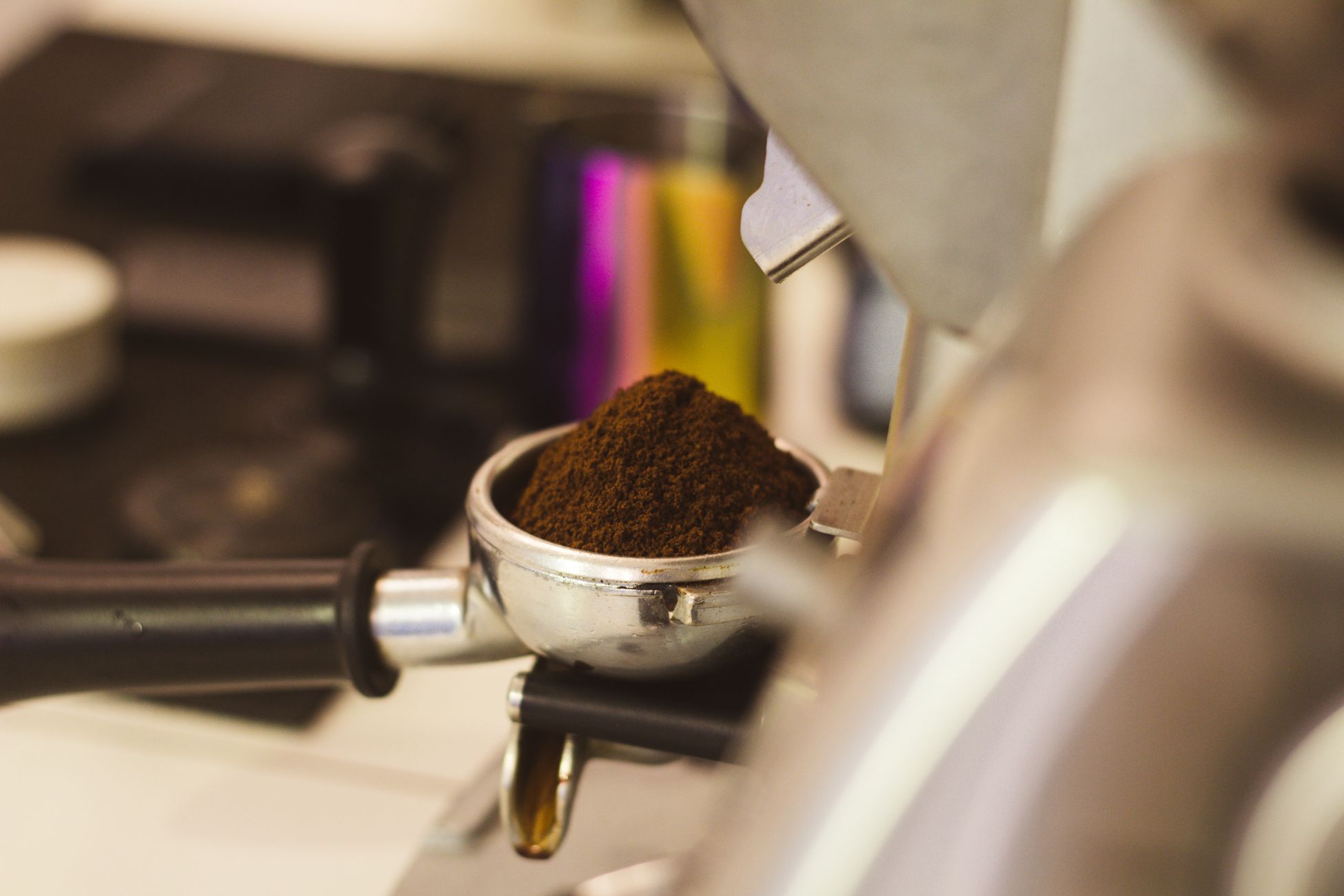
A typical stock basket is stamped or punched. A die presses through sheet metal and forms the holes, and the tooling wears over time.
The result is a set of holes that vary. Diameter varies by a meaningful percentage across a single basket. The edges are not clean, and burrs and partial closures show up. The pattern of holes is often uneven, with a denser cluster in some areas and gaps in others. On some baskets the outer ring is more open than the center, or the other way around.
None of this is a manufacturing scandal. It is what stamping at that price produces, and for a machine sold to make coffee for someone who is not weighing their dose, it is entirely adequate.
Precision baskets are made differently. The holes are typically laser cut or made with far tighter tolerance tooling, then deburred and often electropolished. Diameter variance drops substantially. The hole pattern is designed rather than inherited, with the perforated area covering the base evenly and the open area calculated to give a target total flow.
Some also change the wall geometry. Straight walls versus tapered walls change how the puck compresses and where the edges sit, and precision baskets tend to have straighter sides and a flatter base.
What Changes in the Cup
The honest version is that the change is real but modest, and it shows up as consistency before it shows up as flavor.
Shot to shot variation drops. If your shot times wander by several seconds with everything else held constant, an uneven basket is one of the plausible causes, and swapping it often tightens things noticeably.
Bottomless portafilter behavior improves. The characteristic pattern of a good extraction, a full even curtain of coffee that converges into a single stream, is easier to achieve. Spritzing from the edges usually decreases.
Flavor changes are described most often as more clarity and more sweetness. That follows from the mechanism. Removing the overextracted zones removes bitter and astringent contributions, and getting proper flow through the previously slow zones brings the sweetness in that region into the cup.
What it does not do is transform a bad shot. If your grind is wrong or your coffee is stale, the basket is irrelevant.
Pair a good basket with beans that earn it.

The Dose Question Nobody Mentions
Baskets are rated for a dose, and the rating matters more than people expect.
An 18 gram basket is designed to hold 18 grams and produce a puck of a particular depth with the right amount of headspace between the puck and the shower screen. Put 15 grams in it and the puck is shallow, the headspace is large, and the water has room to move around before it hits the coffee. Put 22 grams in and the puck presses against the shower screen when you lock in, which cracks it and creates channels before the pump even starts.
Stock baskets often have a wider usable range because their design was less specific. Precision baskets are frequently tuned to a narrower window, and using them outside it is a common reason people try one and conclude it made things worse.
Check the rating, dose to it, and give yourself a few shots to re dial. A new basket almost always requires a grind adjustment, because the total open area and therefore the flow resistance changed.
Ridged, Ridgeless, and the Other Small Differences
Baskets vary in more than hole quality, and a few of those differences are worth knowing before you buy.
Ridged baskets have a groove pressed around the outside near the top, which is what holds the basket in the portafilter with a spring clip. Ridgeless baskets have no groove and rely on a tight friction fit. Ridgeless are marginally easier to clean and look neater in a bottomless portafilter, but they can fall out when you knock the puck if the fit is loose.
Wall taper matters more. A basket with straight walls produces a puck of even depth across its whole width. A tapered basket produces one that is slightly thicker at the center, which means water travelling down the middle passes through more coffee than water near the edge.
Base thickness affects how much the perforated area flexes under nine bars. A thin base that deforms slightly during a shot changes the flow pattern mid extraction, which is one of the harder problems to notice and one of the reasons better baskets feel more repeatable.
Where It Sits Among Other Upgrades
If you rank the things that affect a shot by how much they matter, it goes roughly like this.
Coffee freshness and quality first, by a wide margin. Then grind quality, since particle distribution is upstream of everything. Then dose and grind setting accuracy, which means owning a scale and using it. Then distribution, which is the WDT tool and how you prepare the bed. Then temperature stability. Then the basket. Then everything else.
That puts a precision basket in the second half of the list, which is the correct place for something that costs between twenty five and eighty dollars and takes thirty seconds to install.
It is a good upgrade for someone who has already done the earlier items and is chasing the last few percent of consistency. It is a poor upgrade for someone whose shots are all over the place, because it will not fix the actual cause and will add a variable to an already confusing situation.
How to Tell If Yours Is the Problem
There is a cheap diagnostic. Hold your basket up to a light and look through the base. You are looking for obvious irregularity, a patch that is clearly more open than the rest, holes that are visibly different sizes, or a region that looks partially blocked.
Then run water through it empty and watch the pattern. A basket with even perforation drops water in a uniform curtain. One with problems shows the problem immediately.
Also clean it properly first. A basket with coffee oil built up in the perforations behaves exactly like a badly made one, and a great many people who bought a precision basket to solve a flow problem could have solved it with a soak in espresso machine cleaner.
Try that first. If the flow is still uneven after a proper clean, and everything upstream is dialed, then the basket is genuinely worth replacing.
And if your shots taste flat rather than inconsistent, the basket was never the issue. Check how long ago your beans were roasted, because that answer explains more disappointing espresso than every piece of hardware combined.
Buy fresh beans first, then chase the details.
All images shown in this blog are sourced from pexels.com.