

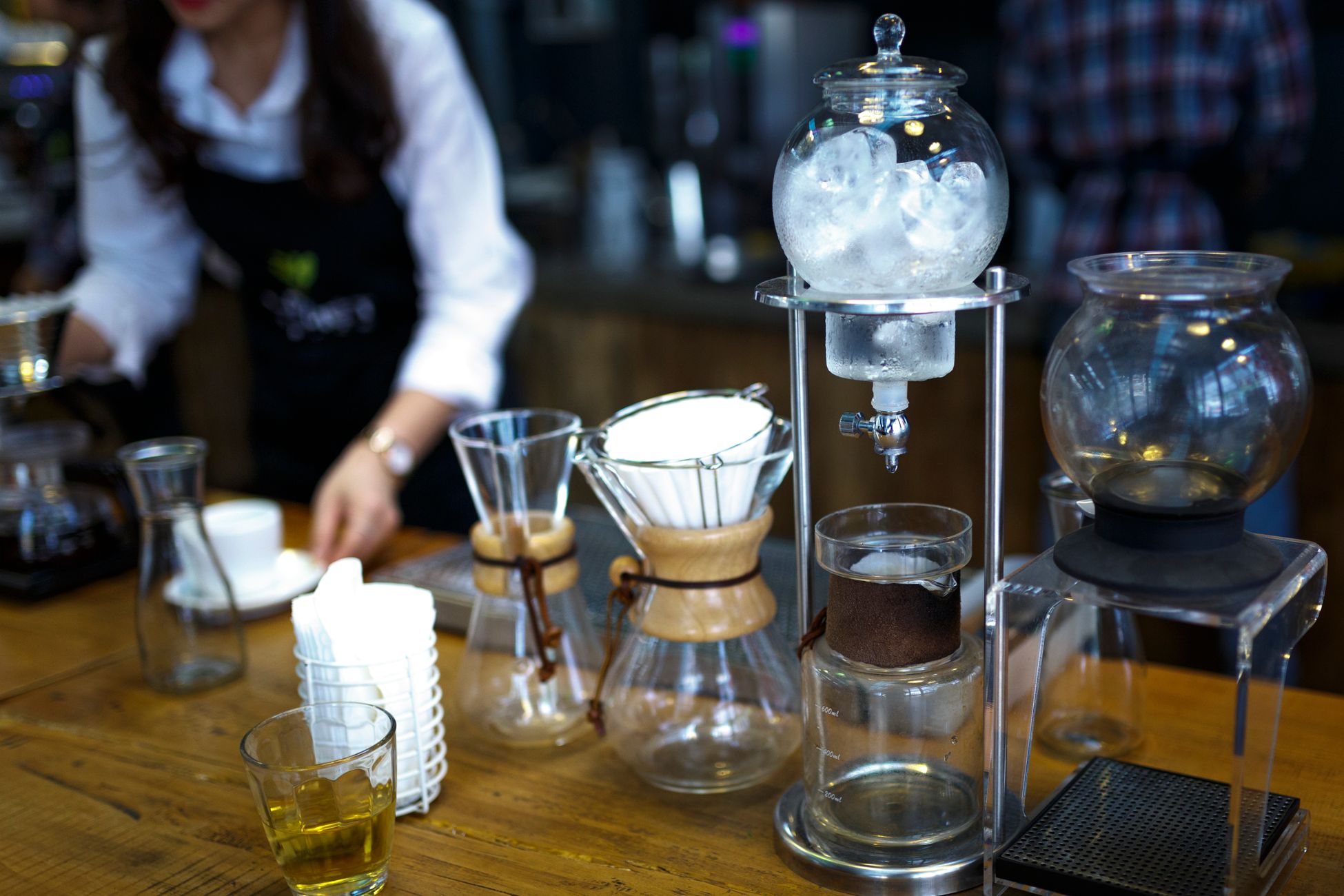
If you have seen a tall glass contraption on a coffee bar counter, with a globe of ice water at the top, a single drop falling every second or so, and a glass coil winding down to a carafe, you have met a cold drip tower. It looks like it wandered out of a chemistry lab. It also makes one of the most interesting cold coffees you can drink.
Most people assume it is a fancy way to make cold brew. A drip tower and a jar of steeping grounds both use cold water and both take hours, but they extract coffee in opposite ways, and the cups taste noticeably different. Once you know what the tower is doing, you can choose the one you actually want, starting with the beans you put in it.
Find a bright, aromatic coffee worth dripping slowly
How A Cold Drip Tower Is Put Together
Strip away the wooden frame and a cold drip tower is a simple stack. At the top sits the reservoir, filled with ice and water. Below it is an adjustable valve that controls how fast that water leaves. Set correctly, it releases roughly one drop every second or two. Not a stream, not a trickle. Individual drops you can count.
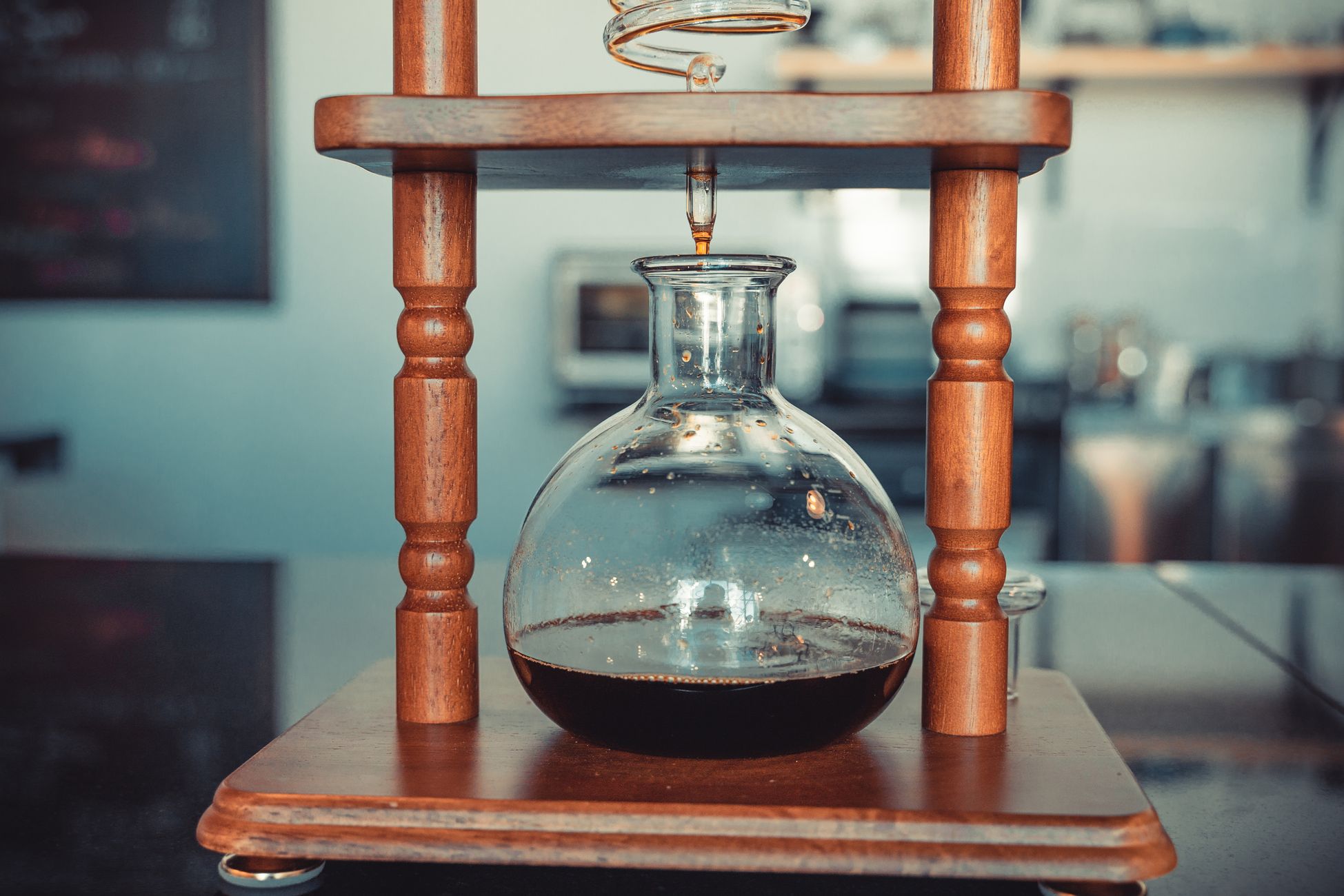
Those drops fall into the coffee chamber, which holds a bed of ground coffee. Many towers put a round paper filter or a perforated disc on top of the grounds, so each drop spreads out and soaks into the bed evenly instead of drilling a wet hole in the middle. Another filter at the bottom of the chamber holds the grounds back while the coffee seeps through, and the brew drips into a carafe below, sometimes by way of that long spiral coil.
A batch takes anywhere from a few hours to most of a day. That patient pace is why the method is often called Kyoto style, after the Japanese city most associated with it.
Percolation Versus Immersion In Cold Water
Regular cold brew is immersion. You dump coarse grounds into a jar, pour in cold water, and leave the whole thing to steep for somewhere between 12 and 24 hours. Every gram of coffee and every drop of water spend the entire brew in the same soup.
A cold drip tower is percolation, done cold and done slowly. Each drop lands on top of the bed, works its way down through the grounds, picks up what it can dissolve, and leaves out the bottom. It passes through once. The grounds never sit in a pool of finished coffee.
That changes how extraction behaves. In immersion, the water gets more concentrated as the hours pass, and the more coffee it holds, the more slowly it pulls anything new out. In percolation, fresh water keeps arriving at the top of the bed while finished coffee keeps leaving at the bottom. The water touching the grounds is always hungrier than the water in a jar of cold brew, so with help from a finer grind, the tower pulls a full flavored coffee in hours rather than a day, even with ice cold water.
Why The Cup Tastes So Different
Made from the same beans, the two drinks barely resemble each other. Regular cold brew is heavy and round. It tastes of chocolate, caramel, and roasted nuts, with very little perceived acidity and a thick, almost syrupy body. Cold brew from very different coffees can start to taste alike, because a day of steeping pulls everything toward the same mellow, dark middle.
Cold drip is lighter in body and much cleaner. The coffee filters through the bed of grounds and the filter beneath it on the way out, so very little sediment reaches the carafe. You get more clarity, separate flavors instead of one blended impression. A fruity coffee tastes fruity. A floral coffee smells floral. The acidity is softer than in a hot cup but clearly present, and it gives the drink a lift immersion cold brew usually lacks.
Part of that comes down to contact. In a jar of cold brew, the finished liquid keeps sitting with the spent grounds for hours, picking up the heavy, flat, sometimes woody character long cold steeps are known for. In a tower, the coffee leaves the grounds as soon as it reaches the bottom of the bed. What ends up in the carafe is the part of the coffee that comes out cleanly and willingly.
Why The Towers Look Like Lab Glassware
The resemblance to a chemistry set is no accident. You need to watch the drip rate, see whether the bed is soaking evenly, and check how much water is left in the reservoir. Glass shows you all of it. The valve works like the stopcock on a lab burette, built for releasing liquid one drop at a time, and the tall upright layout lets gravity do all the work with no pump, no heat, and no electricity.
Cafes put them on the counter because they are the best advertisement a coffee bar can have. A brew that takes most of a morning is impossible to fake, and anyone waiting in line can watch it happen drop by drop. The coffee inside deserves the same attention as the glassware around it.
Shop coffees with enough clarity to shine in a slow drip
Getting The Grind And The Bed Right
Grind finer than you would for regular cold brew. Immersion uses a coarse grind because the grounds have a full day to give up their flavor. A tower gives each drop far less time with the coffee, so you need more surface area. Something close to a pour over grind, medium to medium fine, is the usual starting point. Do not go powdery, though. Grounds that fine pack down, slow the drip, and can clog the bottom filter, and then water pools on top and the tower starts behaving like an immersion brew.
Before you open the valve, pre-wet the bed. Pour a small amount of cold water evenly over the grounds and give them a gentle stir so every particle is damp. Dry coffee resists water at first, and in a slow drip that resistance leaves dry pockets the drops simply run around. Water follows the easiest path, so most of the brew runs down the wet channels and the rest of the coffee barely gets used.
Watching The Drip Rate As The Hours Pass
Say you set the valve to a drop every second, walk away, and come back to find it dripping every three or four seconds.
That happens because the flow through the valve depends on the weight of the water above it. A full reservoir pushes down harder than a half empty one. As the level drops, the pressure at the valve drops with it, and the drip slows even though the valve setting has not changed.
The fix is simple attention. Check the tower every half hour or so and nudge the valve open a little as the reservoir empties to hold the rate steady. Too fast and the water rushes through without picking up enough, giving you a thin, sharp, watery coffee. Too slow and the brew drags on far longer than it needs to, and the coffee turns heavy and muddy.
Then taste. If it tastes thin or sharp, grind a little finer or slow the drip slightly. If it tastes harsh, muddy, or drying, grind a little coarser or speed it up. Change one thing at a time so you know which adjustment did the work.
Which Coffees Belong In A Tower
Immersion cold brew is forgiving, because its heavy body hides small flaws. A drip tower shows you much more. The clarity that lets a good coffee's fruit and florals through also lets a stale coffee's flatness, or a careless roast's harshness, through just as clearly.
Bright, aromatic coffees are the ones that shine. Washed coffees from places like Ethiopia and Kenya, with their citrus, berry, and floral character, are classic choices. Fruit forward natural process coffees come out jammy and juicy. Darker roasts work as well and give a deep, smooth, bittersweet glass, but the method's real gift is clarity, and clarity rewards coffees with something bright to show.
Roast evenness matters here more than usual. Solude air roasts its coffee, suspending and tumbling the beans in a column of hot air instead of resting them against a hot metal drum. The heat reaches every bean evenly, nothing scorches or tips against metal, and the chaff blows away before it can burn. In a brew method that hides nothing, an even roast is exactly what you want the tower to reveal.

How To Serve Cold Drip
Many cafes pour cold drip neat in small amounts, the way you might pour a good spirit. Others serve it over a single large ice cube that chills it without watering it down quickly.
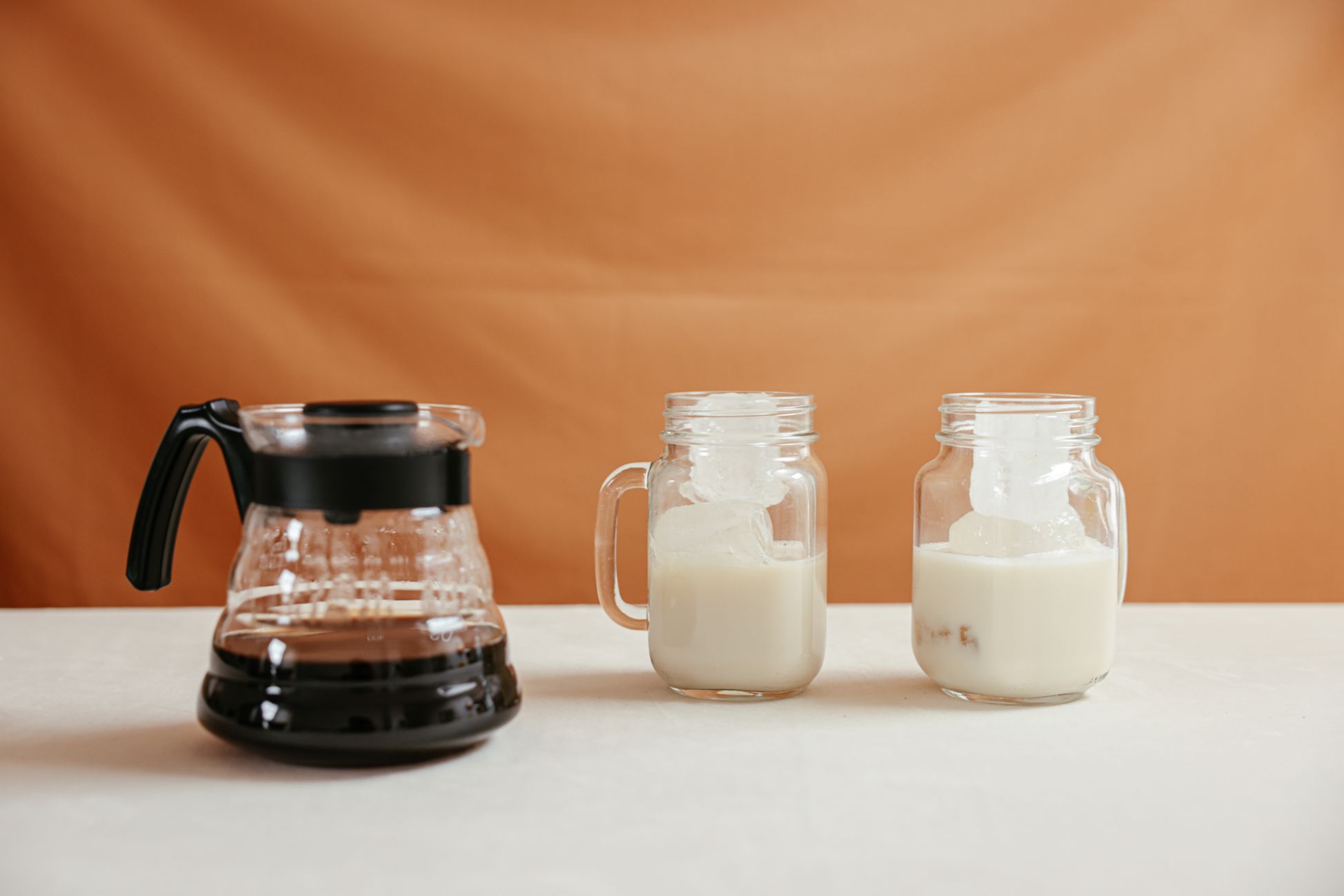
Taste it straight before you add anything. Plenty of people who drown regular cold brew in milk find they want cold drip on its own, or with a splash of water at most. Milk covers exactly the detail the tower spent hours drawing out. Keep what is left in a sealed bottle in the fridge and drink it within a few days, while the aromatics are still lively.
If you have only ever had cold coffee as a heavy, chocolatey cold brew, a cold drip tower is worth seeking out at a cafe or setting up at home. Same beans, same cold water, a completely different glass. Start with a coffee that has something bright to say.
Pick a coffee from our most popular collection for your first tower brew
All images shown in this blog are sourced from pexels.com.