

You can take one bag of coffee, grind it the same, use the same water, and get three completely different cups depending on how you brew it. That is not a flaw. It is the whole point. The brew method is not just a delivery system for caffeine. It is a set of decisions about what parts of the coffee you want to taste, and each of the three most popular manual methods makes those decisions differently.
Pour over, French press, and Aeropress each pull a distinct kind of cup out of the same beans. One is clean and articulate, one is heavy and full, one is fast and forgiving. There is no best one. There is only the one that fits the coffee in front of you and the morning you actually have. Here is how they differ, and how to pick.
Whichever method you land on, it can only be as good as the beans going into it. Start with one of our most popular roasts and let the method show off what is already there.
What Actually Changes Between Methods
Before the individual methods, it helps to know the two levers that make them taste different. The first is the filter. A paper filter traps the coffee's oils and the finest particles, giving you a cup that is clean and transparent. A metal filter lets those oils and fines through, giving you a cup that is heavier and rounder in the mouth. The second is contact time and agitation, meaning how long the water and coffee sit together and how much they move. Longer, fuller contact pulls out more body and more of everything. Shorter, gentler contact keeps things bright and articulate.
Every method below is really just a different combination of those two levers. Once you see it that way, the differences stop being brand loyalty and start being a choice you can make on purpose.
Pour Over: Clean and Articulate
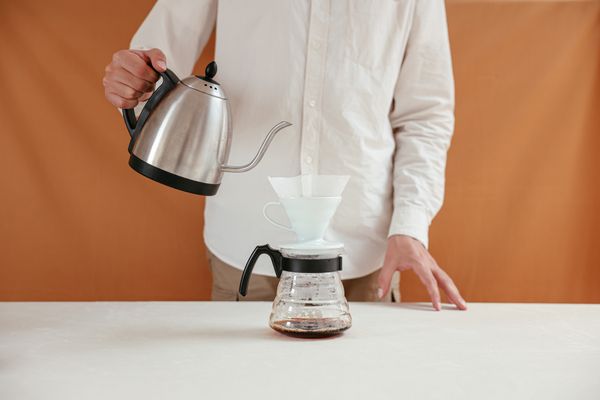
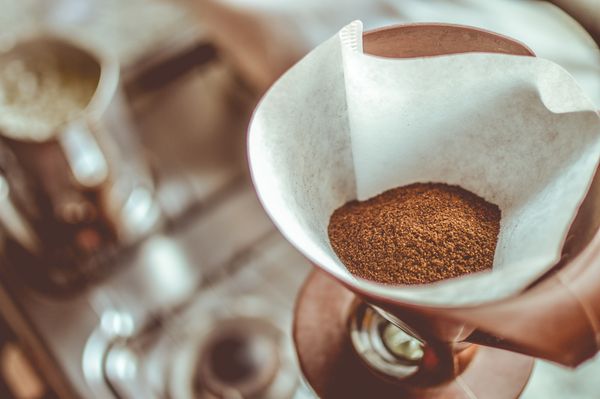
Pour over is water poured slowly over a bed of ground coffee sitting in a paper filter, draining through by gravity into a cup or carafe below. Think of a V60, a Kalita, a Chemex. The paper filter is the defining feature. It catches oils and fine particles, so the cup that lands is bright, clear, and defined. If a coffee has delicate floral or fruit notes, pour over is the method that lets you actually hear them.
The trade is that pour over asks something of you. Grind size, water temperature, and the pace of your pour all matter, and a sloppy pour gives a sloppy cup. You are steering the extraction in real time, controlling how fast the water moves through the bed. That control is exactly why people love it and exactly why it can feel fussy on a groggy morning.
Reach for pour over when you have a bright, complex, high altitude coffee whose whole appeal is clarity, and when you have five quiet minutes to give it. A washed Ethiopian or a bright Kenyan brewed as pour over is one of the clearest, most articulate cups you can make at home. Use a medium grind, water just off the boil, and pour in slow, steady stages starting with a bloom.
French Press: Heavy and Full
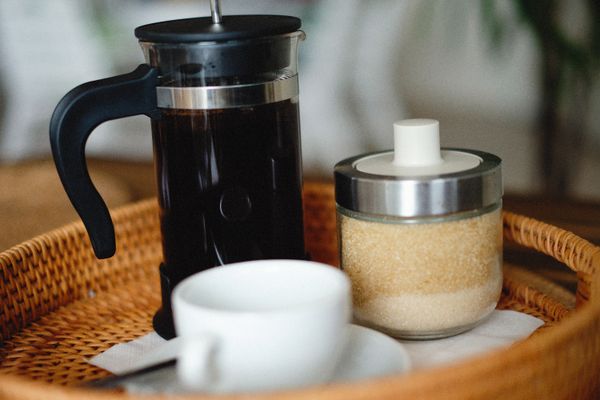
French press is the opposite philosophy. Coarse coffee steeps directly in hot water for about four minutes, then a metal mesh plunger presses the grounds to the bottom and you pour. The coffee is fully submerged the entire time, and the filter is metal, not paper. Those two facts define the cup.
Because the metal mesh lets oils and fine particles through, French press coffee is heavy, rich, and full bodied, with a weight and texture on the tongue that pour over deliberately strips away. Because the coffee steeps completely submerged, extraction is even and forgiving. There is no pour technique to master. You add water, wait, and press. It is genuinely hard to mess up, which makes it a great everyday method for people who want a satisfying cup without a ritual.
The catch is sediment. Some fine grounds always slip past the mesh and settle at the bottom of your cup, so the last sip can be a little muddy. Use a coarse, even grind to keep that to a minimum, and pour it all out of the press when the timer ends so it does not keep extracting and turn bitter. Reach for French press when you want a bold, comforting, full bodied cup, when you are brewing a richer or darker coffee, or when you simply do not want to think about it. Chocolatey, nutty, heavier coffees shine here.
See which of our roasts our customers reach for first and match one to the method that suits your morning.
Aeropress: Fast and Forgiving
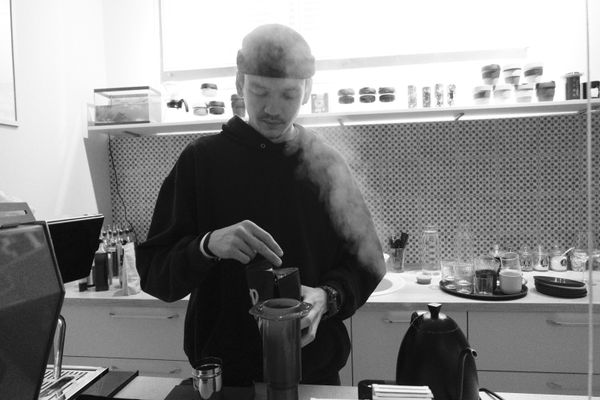
The Aeropress is the newest of the three and the hardest to categorize, because it is really a small pressure brewer. Coffee and water go into a plastic chamber, steep briefly, and then you press the whole thing through a filter with a plunger, using gentle air pressure to push the water through in seconds. It uses a small paper filter by default, though metal filters exist for it too.
That combination makes the Aeropress fast, forgiving, and remarkably clean. Total brew time is often under two minutes, cleanup is a single push of the puck into the trash and a quick rinse, and the paper filter gives you a clear cup without the sediment of a French press. Because the contact time is short and you control it precisely, it is very hard to over extract, which makes it one of the most beginner friendly methods there is.
The Aeropress is also the most flexible. Fine grind or coarse, short steep or long, standard or the popular inverted method, small changes produce very different cups, and you can dial a recipe to taste. It travels well too, since the whole thing is nearly unbreakable plastic. Reach for the Aeropress when you want a quick, clean, single cup with minimal fuss, when you are brewing for one, or when you are traveling and cannot bring a whole setup. It happily handles almost any coffee you give it.
A Quick Way to Choose
Strip it down to what your morning actually looks like. If you have time and a bright, delicate coffee you want to taste in full detail, brew pour over. If you want a heavy, rich, comforting cup and you would rather not fuss, brew French press. If you want something fast, clean, and forgiving, especially for a single cup, brew Aeropress.
You can also let the coffee decide. Light roasted, high altitude, fruity or floral coffees generally reward the clarity of pour over or Aeropress. Darker, heavier, chocolatey coffees generally love the body of a French press. There is no rule you cannot break, and half the fun is breaking it. Brew the same bag three ways across a week and taste what each method does to it. That single experiment will teach you more about your own preferences than any article can.
The Method Is a Tool, Not a Team
People get oddly tribal about brew methods, as if choosing one means the others are wrong. They are not rival teams. They are tools, and a good home setup has more than one. Keep a pour over cone for the mornings you want clarity and time, a French press for the mornings you want body and ease, and an Aeropress for the mornings you want speed or you are packing a bag.
The coffee underneath all of it matters more than any of them. A great method cannot rescue stale, cheap beans, but a fresh, well roasted coffee will taste distinct and delicious through all three. Get the beans right first, then let the method decide what part of them you want to hear that morning.
Pick a fresh bag and try it three ways
All images shown in this blog are sourced from pexels.com.