

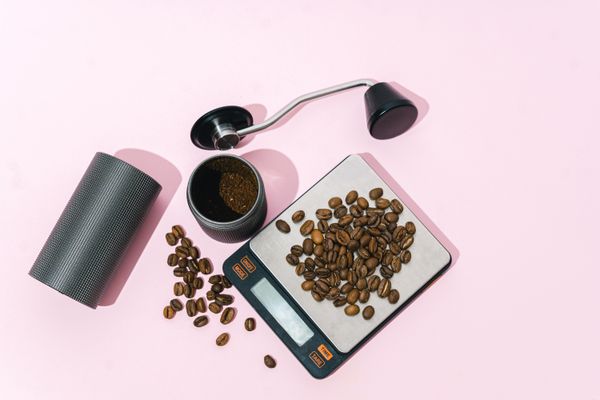
Opening a fresh bag of espresso beans should be exciting. Too often it is stressful, because the first shot from a new bag rarely tastes like the last shot from the old one, even on the same machine with the same settings. Suddenly the pour is too fast, or it chokes, and the flavor is off, and you are staring at a wasted shot wondering what went wrong. Nothing went wrong. Every bag of coffee is a little different, and dialing in is simply the process of adjusting your grind to fit the new beans. The good news is that with a clear method, you can usually get there in about three shots instead of a frustrating dozen.
Dialing in sounds like a dark art when people talk about it, but it is really just a short, logical loop. You pull a shot, read what it tells you, make one change, and pull again. Do that a couple of times and you land on a great shot. Here is exactly how to do it without wasting half the bag.
This whole process assumes the beans are worth dialing in, so start there. Reach for a fresh espresso roast and give your grinder good coffee to work with.
Why Every New Bag Needs Dialing In
First, understand why this is even necessary, because it stops the frustration. Coffee beans vary from bag to bag in ways that change how they behave under pressure. A different origin, a different roast level, a different roast date, even a different humidity in your kitchen all change how the coffee grinds and how the water flows through it. Fresher beans release more carbon dioxide and resist the water more. Denser beans from higher altitude grind differently than softer ones. A slightly darker roast is more brittle and grinds finer at the same setting.
Because of all this, the grind setting that was perfect for your last bag will almost never be perfect for the new one. Dialing in is just the act of finding the new correct grind. It is not a sign you are doing something wrong. It is a normal, expected step every single time you switch coffees, and once you accept that, it stops feeling like failure and starts feeling like routine.

Lock Down Everything Except the Grind
The secret to dialing in fast is to change only one variable at a time, and the variable you change is grind size. Everything else stays fixed. That means you decide on your dose, your target output, and your timing before you start, and you hold them constant while you hunt for the right grind.
Set your dose, the amount of dry coffee, and weigh it every time with a scale so it never moves. A common starting point for a double is around eighteen grams, but use whatever your basket is made for. Decide your target output, the weight of espresso in the cup, and a standard aim is roughly a one to two ratio, so about thirty six grams of espresso out from eighteen grams in. And note your target time, generally somewhere between twenty five and thirty five seconds for the shot to pour. With dose and output locked, grind size becomes the one lever that controls how long the shot takes and how it tastes. Now you can actually learn something from each pull.
See the roasts our regulars dial in every week and put this method to work on a bag.
Shot One: The Baseline
Pull your first shot at whatever grind setting you last used, or a middle setting if the grinder is new to you. Do not expect it to be perfect. Its only job is to tell you which direction to move. Weigh your dose in, pull the shot, and time it from the moment you start the pump until you hit your target output weight.
Now read it. If the shot hit your target output much faster than your target time, gushing out in fifteen or twenty seconds, the water is moving through too easily. The grind is too coarse. If the shot crawled, taking well over thirty five seconds or barely dripping to reach your output, the water is struggling. The grind is too fine. Most of the time a new bag runs fast, because a fresh setting rarely matches, and you will need to grind finer. Either way, you now know which way to turn the dial.
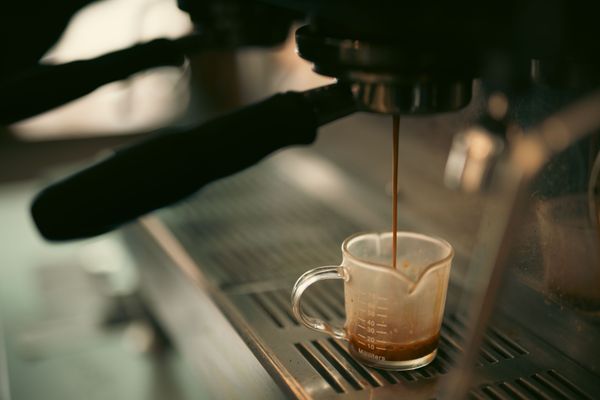
Shot Two: Make the Correction
Adjust your grind in the direction shot one pointed you, and here is the important part, make a real but measured move, not a tiny timid one and not a wild one. If the shot was way too fast, grind a few steps finer. If it was slightly too fast, grind one or two steps finer. Finer grind means more resistance, which slows the shot down. Coarser grind means less resistance, which speeds it up. That relationship never changes, so it is the only thing you have to remember.
Keep your dose and target output exactly the same, and pull shot two. Time it again. You should see the shot time move meaningfully toward your target window. If you went from a fifteen second gusher to a twenty eight second pour, you are basically there. If you overshot and it now chokes at forty five seconds, you went a touch too far and will back off slightly on the next one. Each shot is narrowing the range, which is why this converges so quickly. You are closing in, not guessing.
Shot Three: Confirm and Taste
By the third shot you should be landing in or very near your target time window. Make any final small grind adjustment based on shot two, pull it, and this time pay attention to the taste, not just the clock. The timer gets you close, but your tongue makes the final call. Taste for the balance between sour and bitter.
If the shot is in the right time window but tastes sour, thin, and sharp, it is slightly under extracted, so nudge the grind a hair finer to pull a little more out. If it tastes harsh, bitter, and drying, it is slightly over extracted, so nudge the grind a hair coarser. When the shot pours in your target window and tastes sweet and balanced, with the sourness and bitterness in harmony, you are dialed in. Write the setting down. That is your number for this bag, and you can pull it confidently until the bag runs low.
A Few Things That Speed It Up
Two habits make dialing in faster and less wasteful. First, use fresh, evenly ground coffee and clear the grinder of the previous bag before you start, since leftover grounds from the old coffee will muddy your first shot. A quick purge of a few grams clears the chute. Second, remember that very fresh beans, within a few days of roast, can be jumpy and hard to dial because of all the gas they are releasing. If a brand new bag fights you unusually hard, giving it a few more days to rest can make it settle down and dial in more predictably.
Finally, do not chase perfection down to the last decimal. The goal is a shot that pours in a sensible window and tastes sweet and balanced, not a lab result. Three shots, one variable, a clear read each time, and you are drinking great espresso from the new bag before you have wasted more than a small handful of coffee. Dialing in is not a mystery. It is a short conversation with the beans, and now you know how to have it.
Put the method to work on a fresh bag
All images shown in this blog are sourced from pexels.com.