

Most people meet coffee at the very end of its life, as a dark, dry, roasted bean sitting in a bag on a counter. That is the last chapter of a long story, and it hides almost everything that came before it. Before your beans were beans, they were seeds inside a red fruit growing on a tree on the side of a mountain, and the distance between that fruit and your morning cup is longer and stranger than most people ever realize.
Understanding the journey changes how you taste. Once you know what a coffee cherry went through to reach you, the flavors in the cup stop being abstract and start being the visible fingerprints of real decisions made by real people across thousands of miles. Here is the whole trip, from the branch to the grinder.
If reading this makes you want to taste the end of the journey done right, start with one of our most popular roasts and follow the story into your own cup.
It Begins as Fruit on a Tree
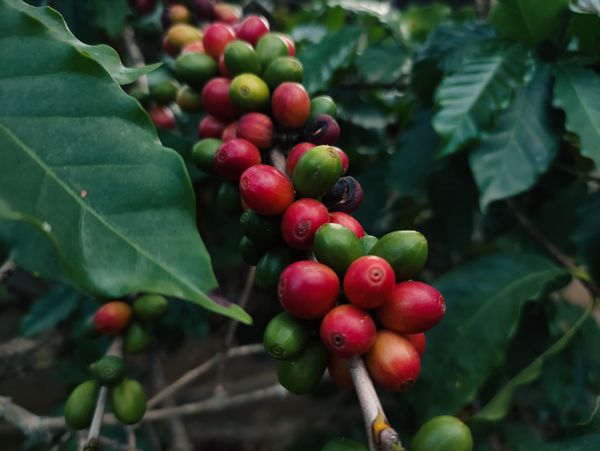
Coffee grows on a shrub, and what it produces is not a bean at all. It is a fruit called a cherry, usually bright red when ripe, about the size of a small grape. Inside each cherry, surrounded by sweet pulp, sit two green seeds facing each other. Those seeds are what we eventually roast and drink. The tree takes three to four years after planting before it produces its first real harvest, and a single tree yields only enough cherries for a pound or two of finished coffee per year.
The best coffee grows in a band around the equator, at altitude, where the climate is warm but the elevation keeps temperatures cool. Cooler conditions slow the fruit's ripening, and that slow ripening is where much of the sweetness and complexity you taste later gets built. Geography is not a detail here. It is the first ingredient.
The Harvest Is Done by Hand
When the cherries ripen, they have to come off the tree, and on quality focused farms that still happens by hand, cherry by cherry. Ripeness does not arrive all at once. On the same branch you will find green, yellow, and deep red cherries side by side, so pickers walk the same trees several times across a season, taking only the ripe fruit each pass and leaving the rest.
This is slow, careful, physically hard work, usually on steep terrain a machine could never navigate. It is also the first place quality is won or lost. A batch full of underripe cherries will taste sharp and vegetal no matter how skillfully it is roasted later. Everything downstream depends on the fruit going into the process being ripe, and getting that right takes human eyes and human hands.
See the coffees our customers reach for first and know that each one started with someone picking ripe fruit by hand.
Processing Frees the Seed From the Fruit
Now the farm has piles of ripe cherries, and inside each one is the seed we want. Getting the seed out and dried, without letting it rot or ferment badly, is called processing, and how it is done shapes the flavor as much as anything.
In the washed process, machines strip the outer fruit away, then the seeds ferment in water tanks to loosen the sticky layer that remains, and finally they dry. Washed coffees tend to taste clean and bright, with the origin's acidity on full display. In the natural process, the whole cherry is laid out to dry with the fruit still wrapped around the seed, so the seed absorbs sweetness and fruit character as it dries. Naturals taste heavier, fruitier, sometimes wild. The honey process sits between the two, drying the seed with some of the sticky layer left on for a rounder sweetness.
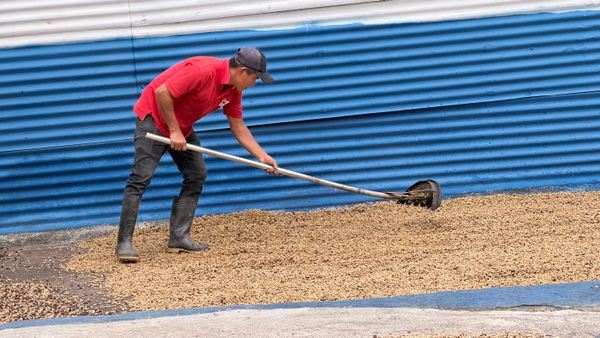
None of this is automatic. Coffee dries on raised beds or patios and has to be turned by hand, sometimes for weeks, watched constantly so it does not mold or dry unevenly. The same lot of cherries can become three very different coffees depending on which path it takes here.
Milling and the Long Wait
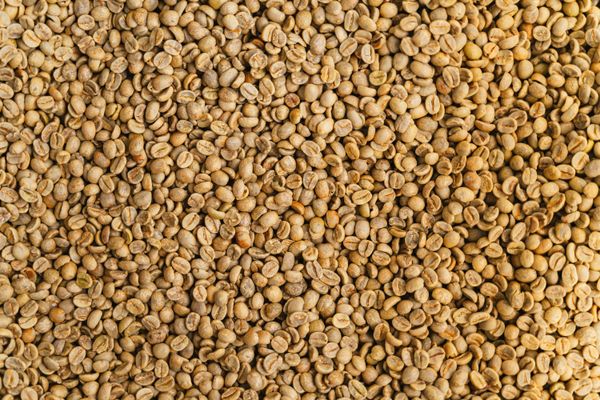
Once the seeds are dry, they are still wrapped in a papery protective layer called parchment. At the mill, that layer is removed, and the beans are sorted, by size, by density, and often by hand to pull out defects. Discolored beans, broken beans, and the occasional pale dud that would flatten a batch get removed. What is left is green coffee, the hard, grassy smelling, unroasted seed that is actually traded around the world.
Green coffee is remarkably stable. It can rest and travel for months without losing much, which is the only reason a coffee grown on a mountain in Ethiopia can end up roasted fresh in a town on the other side of the planet. From the mill, the green beans are bagged, loaded into shipping containers, and sent across oceans to importers and roasters. That ocean crossing alone can take weeks.
The Roaster Wakes the Flavor Up
Green coffee smells like hay and tastes like almost nothing. Everything you associate with coffee, the aroma, the sweetness, the body, the color, is created in roasting. This is where the seed finally becomes the bean you recognize.
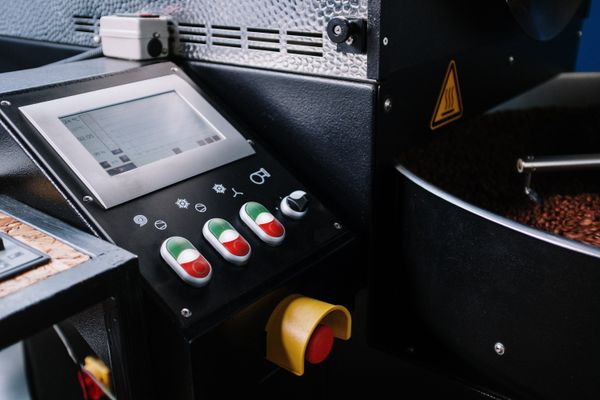
Inside the roaster, heat drives water out of the bean and triggers a cascade of chemical reactions. Sugars caramelize. The Maillard reaction, the same browning that happens to bread and seared meat, builds hundreds of new flavor and aroma compounds. Around the point roasters call first crack, the beans audibly pop as internal pressure releases, and the coffee becomes drinkable. A skilled roaster is steering all of this in real time, deciding exactly how far to push each specific coffee to bring out its best without burning away the character the farm worked to create.
Roast too light and the origin flavors stay locked in, grassy and sharp. Roast too dark and they burn off, leaving only the taste of roast itself. The narrow window in between, tuned to each coffee, is the roaster's craft. It is why the same green beans can become a wonderful cup in one roaster's hands and a flat one in another's.
Freshness, and the Clock That Starts at Roast
The moment coffee leaves the roaster, a new clock starts. Roasted beans release carbon dioxide for days and weeks, a process called degassing, and they slowly lose their aromatics to the air. Coffee is at its best in the first few weeks after roasting, which is exactly why a roast date on the bag matters so much more than a distant best by date.
This is the final leg of the journey, and it is the one you control. Buy coffee fresh, in amounts you will finish in a few weeks. Store it whole bean, sealed, cool, and away from light. Grind it right before you brew, because a whole bean holds its flavor far longer than ground coffee, which goes stale within minutes of grinding as its surface area explodes and its aromatics rush out.
Then You Grind, and the Story Ends in Your Cup
By the time you scoop beans into a grinder, they have been growing, picked, fermented, dried, milled, shipped across an ocean, roasted, and rested. Years of a tree's life and months of careful human work are sitting in that scoop. The grind, the water, and the brew are the last small steps in a very long chain, and they are the only ones that happen in your kitchen.
Knowing the journey is not trivia. It is what turns a fruity note into the memory of a natural process, an origin's brightness into the signature of altitude, a clean sweetness into the mark of careful picking and roasting. The cup in front of you is the last line of a story that started on a tree you will never see. Drink it a little slower, and you can almost taste the whole trip.
Follow the journey into your own cup
All images shown in this blog are sourced from pexels.com.