

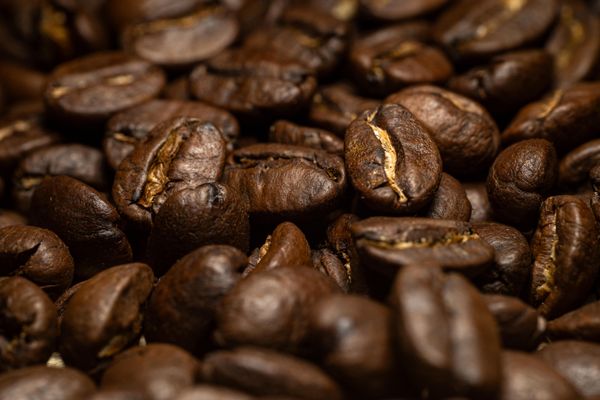
Walk into almost any conversation about coffee and you will eventually hear one of two confident claims. Either dark roast has more caffeine because it tastes so strong and bold, or dark roast has less caffeine because roasting burns the caffeine away. Both get stated as fact. Both get repeated by people who should know better. And the truth is more interesting than either, because the honest answer is that the difference is so small it almost never matters, and the reasons people believe otherwise reveal a bunch of misunderstandings about how coffee actually works.
If you have been choosing your roast based on how much of a caffeine kick you think it delivers, you can stop. Let us walk through what roasting really does to caffeine, why the myths took hold, and what actually determines how much caffeine ends up in your cup, because it is not the roast level.
Roast level is a flavor choice, not a caffeine dial, so choose it by taste. Explore our most popular roasts and pick the flavor you actually want.
Caffeine Is Remarkably Stable Under Heat
Start with the science, because it settles most of the argument. Caffeine is a very stable molecule. It does not break down easily, and crucially, it survives the temperatures of coffee roasting almost entirely intact. Roasting happens at temperatures that transform sugars, acids, and hundreds of other compounds in the bean, creating all the flavor and color we associate with coffee. But caffeine largely shrugs it off. A dark roasted bean has nearly the same amount of caffeine inside it as it did when it went into the roaster green.
So the idea that roasting burns off the caffeine, giving dark roast a mellower jolt, is mostly wrong. Very little caffeine is lost to the roast. What changes dramatically during roasting is everything else, the flavor, the aroma, the density, and the weight of the bean, and that is where the confusion comes from. People feel the flavor change and assume the caffeine changed with it. It did not, at least not to any degree you would notice.
Why Dark Roast Tastes Stronger Anyway
Here is the trap. Dark roast tastes bold, intense, and powerful, so it feels like it must be packing more caffeine. But bold flavor and caffeine are two completely different things. The intensity of a dark roast comes from the roasting itself, the deep, smoky, bittersweet compounds created by pushing the beans further. That is a taste sensation, not a stimulant reading. A drink can taste incredibly strong and bold while containing modest caffeine, and a milder tasting light roast can be quietly loaded with it.
This is the single biggest source of the myth. We equate the word strong in flavor with the word strong in caffeine, and coffee happily exploits that overlap. A dark, bitter, punchy cup registers as powerful on the tongue, and the brain fills in the rest. But your tongue cannot taste caffeine in any meaningful way at the levels present in coffee. The boldness you are tasting is roast, not stimulant.
See which roasts our customers reach for and choose by the flavor you love, not a caffeine guess.
The Twist: How You Measure Changes the Answer
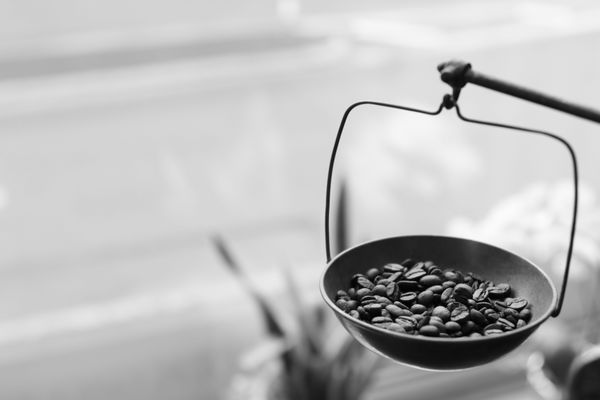
Now for the part that makes this genuinely interesting, and that explains why even careful people end up arguing. When roasting, beans lose water and physically expand and become less dense. A dark roasted bean is puffier, drier, and lighter than a light roasted bean. This means that if you measure your coffee by scoop, by volume, versus by weight, on a scale, you get different results, and they point in opposite directions.
Measure by scoop, and a scoop of light roast beans, being denser and heavier, contains more actual beans and therefore slightly more caffeine than a scoop of puffier dark roast. Measure by weight, and because dark roast beans are lighter, it takes more of them to hit the same gram weight, so a gram of dark roast contains slightly more beans by count and can carry a touch more caffeine. So depending on how you dose, either roast can come out marginally ahead. Both popular claims are technically defensible under different measuring methods, which is exactly why the argument never ends. The catch is that in both cases the difference is small, a matter of a few percent, not the dramatic gap people imagine.
What Actually Determines Caffeine in Your Cup
If roast level is a rounding error, what actually moves the needle? Several things, all of which matter far more than whether your beans are light or dark.
The biggest is how much coffee you use relative to water. A stronger brew ratio, more coffee per cup, means more caffeine, full stop. The brew method matters too. A long, full immersion or a large drip batch extracts more total caffeine than a quick, small espresso, which is why a big mug of drip coffee often has more total caffeine than a single shot of espresso, even though the espresso tastes far more intense ounce for ounce. Serving size is the obvious one people forget. A twelve ounce coffee simply has more caffeine than a six ounce one of the same brew. And the type of bean matters, because robusta coffee naturally contains roughly twice the caffeine of arabica, so a blend with robusta in it will punch harder regardless of roast.
Put those together and you see the real picture. Your dose, your ratio, your brew method, your cup size, and your bean species determine your caffeine. Roast level is far down the list, close to noise.
Grind and Time Matter More Than Roast
Two more factors deserve a mention, because they swamp roast level entirely. The first is grind size. A finer grind exposes more surface area to the water, which extracts more caffeine, all else equal. The second is contact time, how long the water and coffee stay together. A four minute French press pulls more caffeine into the cup than a thirty second espresso from the same beans, simply because the water has more time to dissolve it. This is why brew method reshuffles the whole caffeine picture. A slow, coarse, big batch brew and a fast, fine, tiny shot can start from identical beans and end up worlds apart in total caffeine.
Notice that roast level is not on this list either. You could take one bag of beans, split it in half, and brew wildly different caffeine loads out of it without ever touching the roast, just by changing your dose, grind, method, and cup size. That is how minor the roast contribution really is. It is a flavor lever pretending, in coffee shop mythology, to be a caffeine lever.
So What Should Guide Your Choice
The takeaway is freeing, honestly. Stop choosing roast level for caffeine, because it barely does anything, and start choosing it for flavor, which is what it actually controls. Light roasts preserve the origin character of the bean, the brightness, the fruit, the clarity that tells you where the coffee came from. Dark roasts trade that origin character for the bold, roasty, bittersweet flavors of the roast itself. That is a real and meaningful choice, and it is entirely about taste.
If you want more caffeine, do the things that actually work. Use more coffee. Brew a larger cup. Choose a method that extracts more. Do not reach for a dark roast expecting a bigger jolt, and do not avoid it thinking you are cutting back, because on both counts you are chasing a difference too small to feel. Pick the roast that tastes the way you want your coffee to taste, dose it well, and let the flavor, not a caffeine myth, guide your cup.
Choose your roast by taste, not myth
All images shown in this blog are sourced from pexels.com.